

How to Clean a Shower Head: Unblock Holes, Remove Limescale and Improve Pressure
A blocked showerhead with weak water flow is annoying.
A showerhead harbouring bacteria and nasty minerals is worrying!
Studies have shown around 30–80% of showerheads tested in the US and Europe contain a bacteria named non-tuberculous mycobacteria (NTM) - a relative of TB!
Read on to learn why your showerhead gets blocked and how to fix it in 5 simple steps.
What causes showerhead blockages
Limescale
Limescale is hardened mineral deposits (mainly calcium and magnesium) from your water supply.
(Dripping taps and bad-smelling washing machines often have limescale issues, too.)
Every time you shower, tiny mineral deposits are left behind inside and around your showerhead.
Over time, these deposits build up in your showerhead (it can happen particularly fast if you live in an area with hard water).
It reduces your water pressure and creates that frustrating uneven, erratic spray. Sometimes water spurts off to the side.
Left long enough, the showerhead can block completely.
You can usually spot a limescale problem from the outside. Look for a white, chalky crust around the nozzles.
Bacteria
Your bathroom is warm and steamy in general. This makes it an incredibly suitable environment for bacteria to quickly multiply.
Showerheads (especially plastic ones) can develop an inner coating called a ‘biofilm’. This can protect bacteria from standard water treatment chemicals like chlorine.
Besides mould, NTM and Legionella (the cause of Legionnaires' disease) have been found in showerheads.
When you shower, the water flow releases these bacteria into a fine mist and you could breathe them directly into your lungs.
Steps for cleaning your showerhead
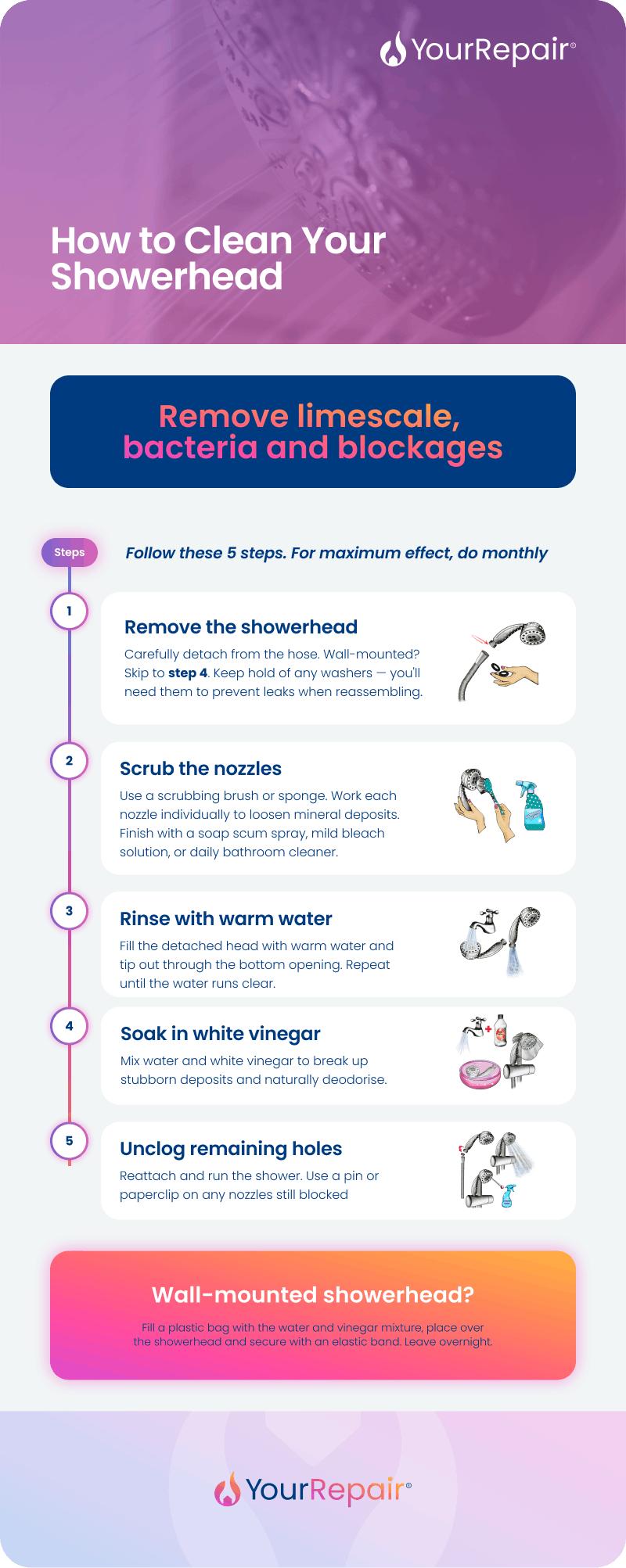
1. Remove the showerhead
The first step is to carefully remove the showerhead from the hose.
If your showerhead is fixed to the wall, simply skip to step 4.
Important: Make sure you retain any washers! You will absolutely need these to prevent leaks when you reassemble the hose.
2. Scrub the holes
Using a scrubbing brush or sponge, clean the nozzles.
Take it slow and focus on each individual nozzle to loosen any hard or soft mineral deposits.
To finish off the surface, you can apply:
- A specialised spray designed for soap scum
- A mild bleach solution for hygiene
- A daily bathroom cleaner.
3. Rinse with warm water
Brushing will dislodge debris and mould. Now you need to flush it out.
Allow the detached head to fill with warm water. Then, tip it back out of the bottom opening.
Continue doing this until the water runs clear.
4. Soak in white vinegar
To break up the final stubborn mineral deposits, use a mixture of water and white vinegar. This solution will naturally deodorise your showerhead.
Fixing a removable showerhead
Simply place the detached showerhead in a bucket or bowl of the vinegar solution to soak.
Fixing a wall-mounted showerhead
Fill a plastic bag with the water and vinegar mixture.
Place the showerhead inside the bag and firmly fasten it in place with an elastic band. Leave it overnight.
Get your home covered with home cover Get Covered
5. Unclog remaining holes
Reattach the showerhead (or remove the plastic bag) and turn on the shower.
Expect to see some dirty water at first!
If a few stubborn nozzles are still clogged, use a pin or an paper clip to carefully poke out the final blockages.
Prevent your showerhead from blocking up again!
To prevent future build-up, make cleaning your showerhead part of your plumbing problem prevention and/or spring cleaning routine.
YourRepair’s home cover
While you can handle a blocked showerhead on your own, some problems are best left to the professionals.
Whether you have leaking pipes, blocked sinks, or one of the many other problems homeowners often face, we can get a trusted professional with you fast.
For total peace of mind, get in touch with YourRepair today. We offer comprehensive home emergency cover plans to keep you in control.