

Why Your Washing Machine Smells (and How to Fix It)
Washing machines are one of the most important kitchen appliances to clean.
If neglected, they can smell stale, damp or just unpleasant.
This can ruin your clothes and shorten the life of your appliance.
Signs your washing machine is causing a bad smell

Dark mould might form one or more of the following places in your washing machine:
- The drum
- The door seal
- The detergent drawer.
Or you might even see it on your clothes.
If you don’t see in any of these places, consider whether your dishwasher or sink is causing the bad smell.
Otherwise, perhaps your kitchen needs a deep spring clean.
Steps for cleaning your washing machine
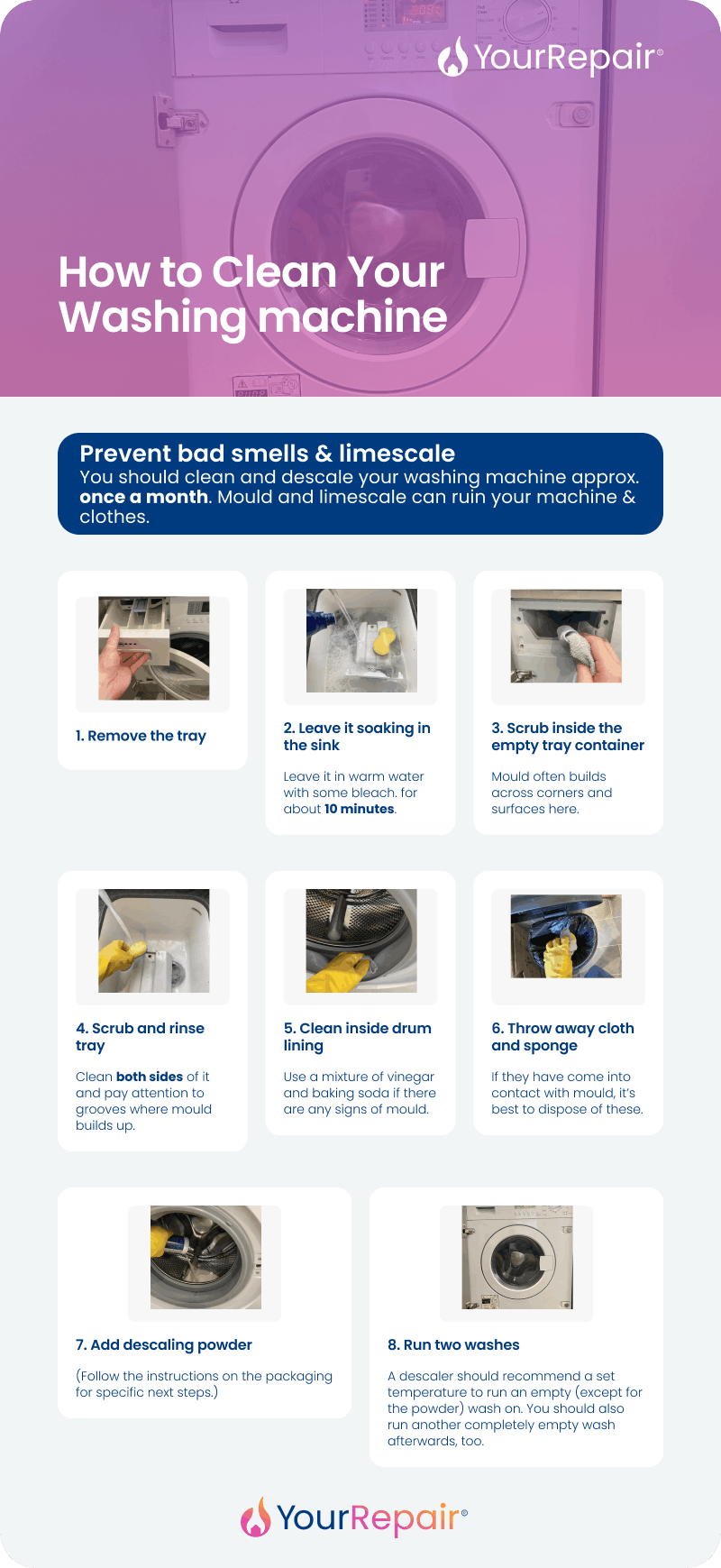
1. Check the manual
The first step is to check your washing machine manual’s instructions.
Some washing machines will have a filter which needs to be cleaned.
Others have specialist instructions for cleaning the drum, seals and drawer.
2. Clean the detergent drawer
Front loading washing machines will have a removable detergent drawer.
Detergent or mould can build up in the detergent drawer.
Sometimes the latter builds up on the underside of the tray, which you can’t see when you open it.
Follow the instructions in the manual for removing it.
Then soak it in water and then use an old cloth or toothbrush to clean all the nooks and crannies.
Rinse and let it dry before replacing it.
Home emergency cover from YourRepair Get Covered
2. Clean the drum
To clean the drum effectively, add a bleach-based cleaner solution into the detergent draw and run a 90°C cycle.
After this, run an empty rinse cycle without the solution (to avoid your clothes getting bleach on them).
The DIY solution
A DIY alternative to a bleach-based cleaner might be in the back of your cupboards: White vinegar.
Pour a cupful of it into the drum and set the machine on a 90°C cycle without any clothes in it.
3. Air dry the machine
Once the hot cycle is complete, open the door to your washing machine and let dry fully.
If the bad smell is still there, place another cupful of white vinegar in its drum and run a wash again.
4. Clean the seals
The final step is to take a clean, damp cloth and wipe the rubber seals around the door of your machine.
Carefully pull back the seals and check for mould and hidden residue.
If there is a lot of black mould, you will need to use a bleach-based product to wipe this away.
You can also soak a cloth in bleach and leave it tucked into the seal (where the mould build up is) for a couple of hours.
Make sure that you run another empty cycle before putting any clothes in the drum.
Otherwise, you risk damaging your clothes with the bleach.
Maintaining a clean washing machine
To keep your machine smelling fresh in the future, always leave the door open and let it dry completely after each wash cycle.
It helps to dry the seal with a clean cloth after each wash.
In general, using powder often keeps the detergent tray cleaner than detergent.
And you should also use a de-scaling solution once every couple of months.
Home cover with YourRepair
Your washing machine is just one component in your home that can cause you a headache.
If you want to enjoy peace of mind that your home is taken care of, get home emergency cover from YourRepair.