

Common Plumbing Problems vs. Plumbing Emergencies: What Every Homeowner Should Know
Every home faces its share of plumbing problems.
From dripping taps to cold radiators, they are always an inconvenience.
You can put off fixing some for months. Others require immediate action.
Knowing the difference between these issues, and how to prevent them, can keep your home running smoothly.
Plumbing problems vs. plumbing emergencies: What’s the difference?
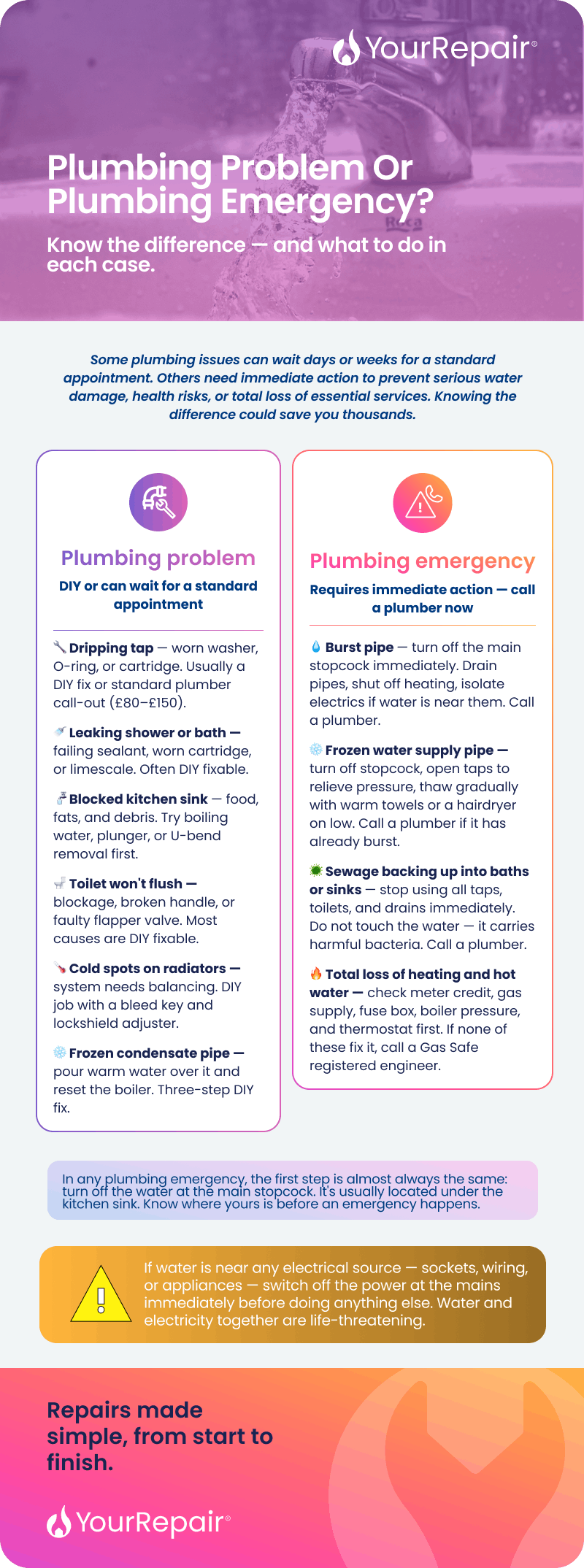
Plumbing problems
A plumbing problem is a minor issue that is inconvenient or annoying, but does not pose an active threat to your safety, health, or the structural integrity of your property.
These are jobs that can easily wait for a standard, pre-booked appointment with a plumber.
Dripping taps
A dripping tap is often fixable without a plumber, though calling one typically costs £80–£150.
For traditional taps, the usual culprits are a worn tap washer or O-ring. This is accessed by turning off the water supply and dismantling the tap handle and stem.
Modern mixer (Monobloc) taps work differently, using a ceramic-disc cartridge rather than washers. So, a persistent drip usually means the whole cartridge needs replacing with the correct model-specific part.
In both cases, isolating the water supply first is essential to avoid a bigger leak.
Broken showers/baths
Broken or leaking baths and showers can often be fixed without a plumber.
A dripping showerhead or mixer tap in the shower is usually down to a worn washer, O-ring, or cartridge (the same components - and fixes - covered for kitchen and bathroom taps).
Leaks at the base of a bath or shower tray often come from failing sealant or grout. You can simply remove the old sealant and reapply a waterproof bead.
Poor water pressure in a shower could be due to limescale in the showerhead. This can be cleared by soaking it in a descaling solution.
As with taps, always isolate the water supply before dismantling any fittings.
Blocked/slow-draining kitchen sink
A blocked or slow-draining kitchen sink is usually caused by a build-up of debris (food, fats, oils, etc.). You might notice a bad smell before it stops completely.
For partial blockages, simple fixes like pouring boiling water or a baking soda and vinegar mix down the drain can help.
For full blockages, a plunger is needed. And if that doesn't work, you may need to use a drain hair clog remover or remove and clear the U-bend directly.
Recurring blockages, multiple blocked sinks, or gurgling toilets can point to wider pipework issues. These should be checked by a professional. A toilet that won't flush
A toilet that won't flush usually comes down to one of four causes:
- A blockage
- An empty tank
- A broken lever handle
- A faulty flapper valve.
Blockages are typically cleared with a plunger or a wire hanger. They’re often caused by objects, (excess paper, wipes, toys, etc).
(There are ways to unblock a toilet without a plunger, too.)
If the cistern tank isn't filling, check the water supply and stopcock first, then the inlet valve. In the meantime, pouring a bucket of water directly into the bowl will trigger a temporary flush.
A broken handle or chain can sometimes be reconnected by hand, but a faulty flapper valve inside the cistern is a straightforward DIY replacement.
Radiator with cold spots
Cold spots on radiators are usually a sign that the heating system needs balancing rather than bleeding.
(Bleeding radiators fixes trapped air in a single radiator, while balancing evens out hot water distribution across the whole system.) It's a straightforward DIY job with the right tools (a bleed key, lockshield valve adjuster, and ideally a thermometer). However, it does take some trial and error to get each valve right.
If cold spots persist even after balancing, the likely culprit is sludge buildup in the pipework, which balancing alone can't fix. This needs a power flush from a Gas Safe engineer.
Frozen condensate pipe
If your boiler shuts down in cold weather and makes a gurgling noise, a frozen condensate pipe is the most likely cause.
(This is technically part of your heating system rather than your plumbing. It's included here as the fix is a similar DIY job to other pipe-related issues.) This pipe carries wastewater away from your boiler to an outside drain. It usually runs along an exterior wall, so it's vulnerable to freezing. And when it freezes, it creates a blockage and forces the boiler to cut out.
Fixing this takes three simple steps:
- Locate the pipe (on the outside of your property)
- Pour warm (never boiling) water over it from the top down
- Reset your boiler.
If the gurgling stops and the boiler fires up, the blockage is cleared. If not, repeat with more warm water.
Plumbing emergencies
A plumbing emergency is an active, high-risk situation that requires immediate plumber callouts.
These are events that:
- Threaten major water damage
- Present health or safety risks
- Leave you completely without essential services.
Burst pipe
Water leaks from burst pipes can escalate quickly. Warning signs include:
- Warped floors
- A persistent damp smell
- Mildew
- A dripping sound that's most noticeable during rain or showers.
If you find a leak, the first step is turning off the water at the main stopcock (usually under the kitchen sink) and draining the pipes by running the cold tap until it stops.
It's also worth shutting off the heating system at its shut-off valve. If water is anywhere near electrical sources, you should also switch off the power at the mains.
Once the immediate risk is contained, call a plumber - unless the issue is with the water mains or a shared pipe, in which case you should call your regional water supplier.
Frozen water supply pipe
A frozen water supply pipe can lead to flooding by cracking under pressure as it freezes and then bursting as it thaws. Signs of it include:
- Taps running slowly (or not at all)
- Frost or condensation on an exposed pipe
- Banging and gurgling noises when you turn a tap on.
If you think a pipe is frozen, turn off the water at the main stopcock. Next, open the affected taps to relieve pressure and give ice somewhere to escape.
You should thaw the pipe gradually with towels soaked in hot water or a hairdryer on a low setting. Do not use a naked flame (it can damage the pipe or start a fire).
If the pipe has already burst, or you're not confident handling it, call a plumber straight away — with home emergency cover, help is only a phone call away.
Sewage backing up into your baths or sinks
Sewage backing up into your bath or sink usually points to a blockage in your main sewer line. Signs this is happening include:
- Water appearing in the bath when you flush the toilet or run the washing machine
- Gurgling sounds from drains
- A persistent sewage smell.
Your toilet, sinks, and bath all connect to the same drain. So, a clog further down forces wastewater to rise back up through the lowest point it can find (often the bath or a downstairs sink). Common causes include:
- A build-up of grease, wipes, or debris deep in the sewer line
- Tree root intrusion
- A collapsed or damaged pipe.
This is not something you should try and solve yourself because water can carry harmful bacteria. You should avoid contact with it and stop using taps, toilets, and drains until it's fixed (by a plumber).
Total loss of heating and hot water
A total loss of heating and hot water is a relatively common homeowners emergency. It's usually a boiler problem or heating fault rather than a plumbing one. Before calling anyone out, run through the basics:
- Check you haven't run out of credit on a prepayment meter
- Confirm your gas supply is working by testing another gas appliance
- Check whether your fuse box has tripped
- Check your boiler's pressure gauge
- Check your thermostat is set above room temperature and trying your boiler's reset function
If none of this works, the cause is likely a specific fault, e.g., a broken pump, circuit board, or motorised valve. You’ll need a Gas Safe registered engineer to diagnose and fix it safely.
Who you should call
It’s sometimes difficult to know whether you need to call a plumber or heating engineer.
There is crossover between some of the work they do. But in general, you need a plumber if you have an issue with water-based appliances like:
- Taps
- Sinks
- Toilets
- Showers
- Drains
And you need a heating engineer if you have problems or emergencies with:
- Boilers
- Hot water cylinders
- Piping (related to central heating)
- Thermostats.
Remember, if the central heating work involves a gas appliance, ensure your engineer is legally on the Gas Safe Register. Unqualified gas work carries a fatal risk of carbon monoxide leaks.
The homeowner’s prevention checklist
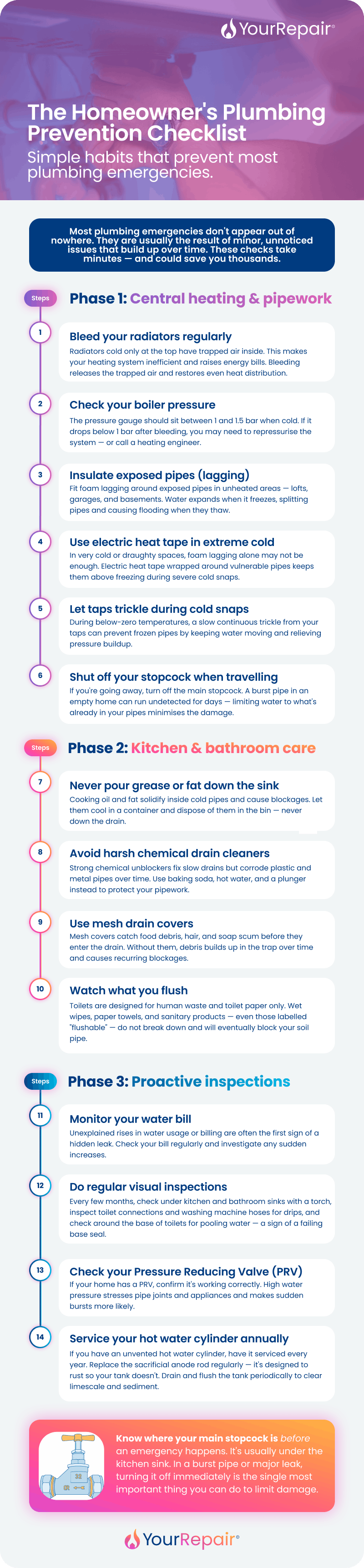
Most plumbing emergencies don’t appear out of nowhere.
They are usually the result of minor, unnoticed issues that build up. The below checklist can help you prevent problems or emergencies from occurring.
1. Central heating & pipework Care
Bleed your radiators regularly
Radiators with cold spots only at the top (as opposed to being cold throughout) have trapped air inside. This makes central heating systems inefficient, which raises heating bills (and carbon footprints!).
Check your boiler pressure
Releasing trapped air can drop your central heating's pressure. The pressure gauge on your boiler should sit between 1 and 1.5 bars when cold.
If it drops too low, you may need a heating engineer to help re-pressurise the system.
Insulate your pipes (lagging)
Frozen pipes are a home emergency in the UK’s winters. Water that freezes expands, causing the metal or plastic pipes to split.
When pipes thaw, water can then pour through your ceiling. You can reduce the chances of this by fitting foam lagging around exposed pipes in unheated areas (lofts, garages, basements, etc.).
Use active freeze protection
In extremely cold and drafty spaces, foam lagging might not do the job. Consider wrapping vulnerable pipes with electric heat tape to help keep them above freezing.
Let your taps trickle
During severe (i.e., below zero) cold snaps, a very slow, continuous trickle of water running from your taps can reduce the chances of frozen pipes. It can keep the pipe clear and relieve pressure.
Shut off your mains stopcock when travelling
If you are going away on holiday, even for a few days, shut off your main stopcock.
If a pipe freezes and bursts while your house is empty, water might run uninterrupted for days, causing serious damage.
A shut off mains stopcock ensures that potential leaks are limited to the water already in your property’s pipes.
2. Kitchen & bathroom drain care
Bin the grease
Never pour cooking oil, fat, or grease down your kitchen sink. As they cool inside cold pipes, they solidify and can block drains. Instead, let these substances cool in a container and then scrape it directly into your bin.
Avoid harsh chemical drain cleaners
Strong chemical unblockers (available in most supermarkets) can often fix slow-draining sinks. However, they corrode and melt plastic and metal pipes over time.
So, sticking to baking soda and hot water and plungers helps preserve your pipes.
Use drain covers
Mesh drain covers collect food debris before they slip down into the trap. Without them, this debris can build up over time.
Watch what you flush
Toilets are only designed to handle human waste and toilet paper. Flushing other objects (wet wipes, paper towels, sanitary products, etc.) down them often causes blockages.
Even if the packaging claims they are "flushable," many do not break down in water and will eventually block your soil pipe.
3. Proactive inspections & system maintenance
Monitor your water utility bill
Keep a regular eye on your water bills. Unexplained, sudden rises in water usage or billing are often signs of plumbing problems.
Do regular visual inspections
Every few months, do a quick visual inspection of key plumbing areas in your home. This can include:
- Looking under your kitchen and bathroom sinks with a torch
- Checking your toilet connections, washing machine hoses, and sink connections for drips.
- Inspecting the floor area directly surrounding the base of your toilets. If you spot water pooling, the wax or rubber toilet base seal is failing and needs replacing before it rots your floorboards.
Check the Pressure Reducing Valve (PRV)
If your home has a PRV installed, check that it’s working well. High water pressure puts stress on your pipe joints, valves, and appliances, making sudden pipe bursts more likely.
Maintain your hot water cylinder
If you have an unvented hot water cylinder, have it serviced annually. It is highly recommended to change the sacrificial anode rod regularly. This rod is designed to rust so that your cylinder tank doesn’t.
Draining and flushing the tank periodically also clears out limescale and mineral sediment that reduces heating efficiency and can cause tank failure.
Prepare for guests
Having more people in your home puts more pressure on your plumbing system.
This is true around Christmas when pipes are more likely to freeze. But it's also true of summer, when people take more showers.
Prepare for an influx of guests by checking everything shortly before they arrive.
Home cover from YourRepair
Shield your home from costly and unexpected disasters with YourRepair's home emergency cover.
Enjoy peace of mind and don't face a home emergency alone again. T&Cs apply.