

What Is a System Boiler — and Is It Right for Your Home?
There are three main types of boiler in UK homes: combi, conventional and system.
Each suits different households.
Here's a clear introduction to the system boiler.
It's middle ground option that's increasingly popular with larger homes.
System Boilers: The middle ground boiler
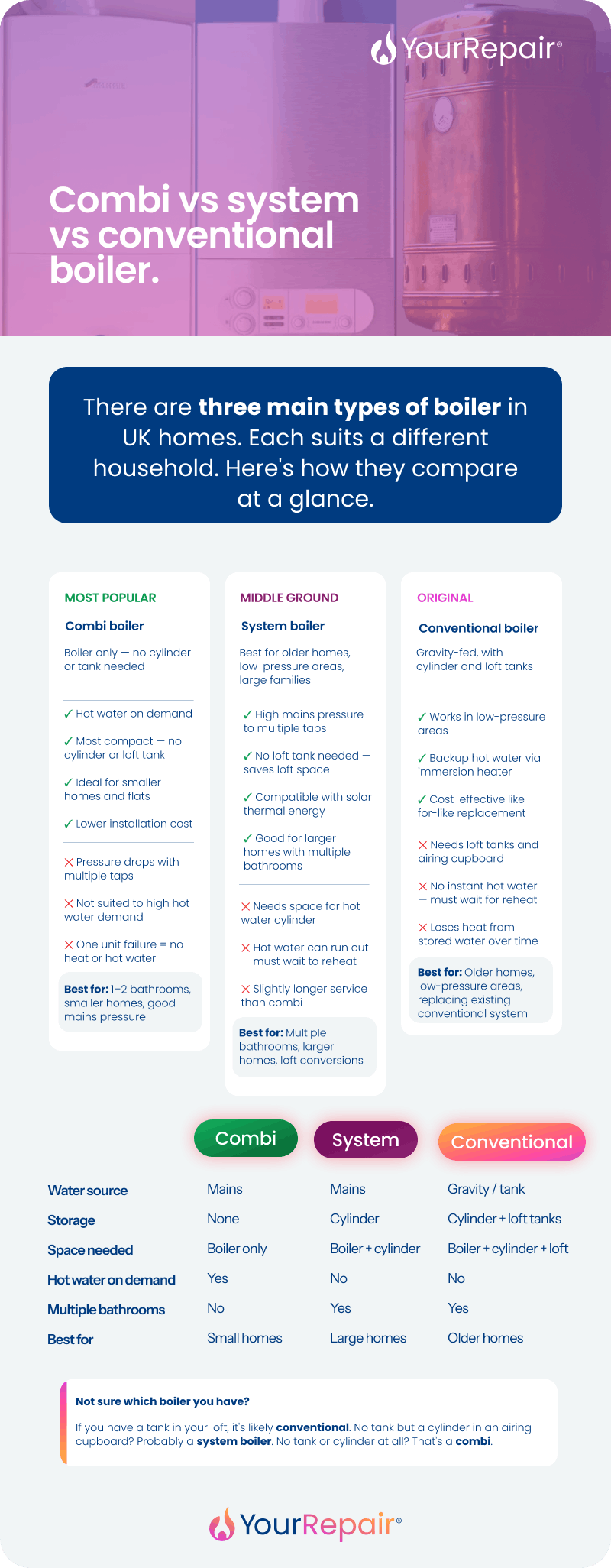
A system boiler sits right between a combi boiler and a conventional boiler.
Like a combi boiler, it takes water directly from your mains supply.
Like a conventional boiler, it stores that heated water in a dedicated cylinder.
Here are the only two components you need for a system boiler setup:
- A boiler unit
- A hot water storage cylinder (usually kept in an airing cupboard)
Advantages of system boilers
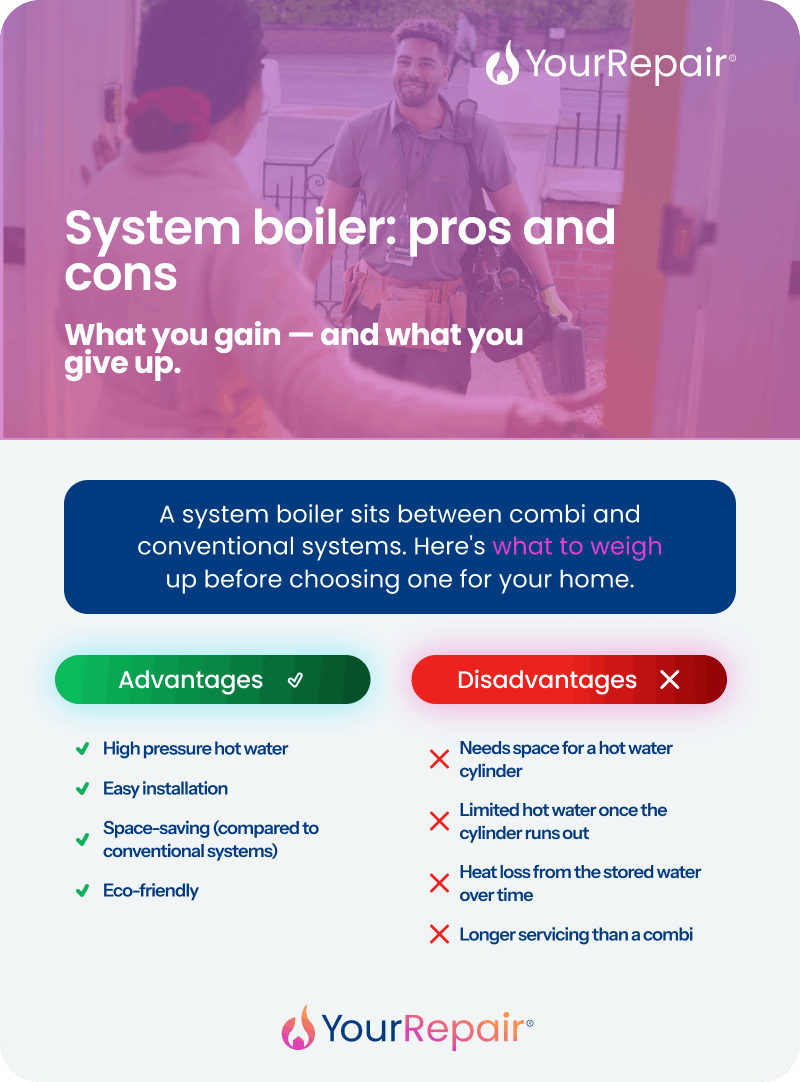
High water pressure
Conventional boilers rely on gravity to push water down from the loft.
Because system boilers take water directly from the mains, you get fantastic pressure.
They can easily supply hot water to multiple taps and bathrooms simultaneously, which combi boilers simply cannot do.
So, they can increase the value of homes that have more bathrooms.
Easy to install Easier to install
System boilers hold all of the components needed to heat water within themselves.
So, the installation process is relatively fast and simple.
Space saving
You do not need a cold feed water tank in your loft.
This saves a lot of space compared to a conventional boiler.
It makes system boilers perfect for apartments or homes that are planning a loft conversion.
Eco-friendly and fast
System boilers feature a built-in pump to respond quickly to heating demands.
They are also incredibly eco-friendly.
The hot water storage cylinder is often easily compatible with solar thermal energy sources.
Disadvantages of system boilers
Space requirements
System boilers are much smaller than a conventional setup.
However, they still take up more room than a combi boiler.
You must have dedicated space for the hot water cylinder.
Limited hot water
Combi boilers provide hot water on demand.
System boilers do not.
The amount of hot water you get depends entirely on the size of your tank.
Once it empties, you must wait for the system to heat up more water.
And if pressure drops after the cylinder empties, you may need to repressurise your boiler.
Heat loss
Stored hot water will slowly lose heat over time.
You must ensure your hot water cylinder is properly insulated to stop energy waste and keep the system economical.
Servicing requirements
Boiler servicing is an important part of maintaining your system's efficiency and longevity.
The servicing process for a system boiler unit itself is the same as regular boilers.
However, system boiler services are slightly broader and requires an engineer with an additional qualification.
That said, we are talking a mere 30–45 minutes longer for a once a year piece of work.
And its not difficult to find heating engineers with this qualification.
Popular models of system boilers
Many of the top boiler manufacturers create system boilers.
Below you can see a brief overview of some of the system boilers we believe offer good value for money and reliability.
Manufacturer | |||
Warranty duration | Up to 10 years | 2-7 years | 2-5 years |
Potential efficiency | 90%+ | 89%+ | 90%+ |
Output capacity | 15-32kW | 12-64kW | 18-32kW |
How much does a system boiler cost to install?
This will depend on the model of boiler you choose and how much work is required in your home.
Replacing an existing system boiler will be less expensive than replacing a combi boiler with a system boiler.
The price of your new system boiler could vary from between £500 to £3,500.
And if you're replacing an older system, a power flush before installation is strongly recommended. This costs between £300 - 700 on average.
You will also need to factor in the cost of installing the boiler.
(We would recommend getting a few different quotes to find the best deal.)
That said, in the long run, a new boiler can add value to your home and save money on energy bills.
After installing a system boiler
After a new system boiler installation, you'll need to bleed your radiators to remove any air introduced during the work.
It's also an ideal time to balance your radiators.
This ensures the most efficient use of your system boiler so that your hot water evenly reaches all parts of your central heating system.
How home cover can help
For total peace of mind, and a warm home all year round, get in touch with YourRepair today.
We offer comprehensive boiler cover and home care plans with a free annual boiler service.