

Does a New Boiler Add Value to Your House — and When Is It Actually Worth It?
With house prices uncertain and low market sentiment, knowing which improvements offer a return matters.
There's a lot to consider, including whether or not to get a new boiler.
Read on to learn if a new boiler adds value and which renovations actually make a profit.
Practical upgrades win in a slow market
Some experts claim that the UK property market is currently experiencing a silent crash.
House prices have barely moved and are struggling to keep up with high inflation.
When the market cools, buyers become incredibly selective.
Making cosmetic changes will rarely sell your home.
Instead, you must focus on improving the bare bones of the property to attract serious buyers.
And if your boiler's not working, or is not well-maintained (i.e., it doesn't have an annual service), you could lose potential buyers' interest quickly.
The best renovations for adding value
Many homeowners assume any update will increase their asking price.
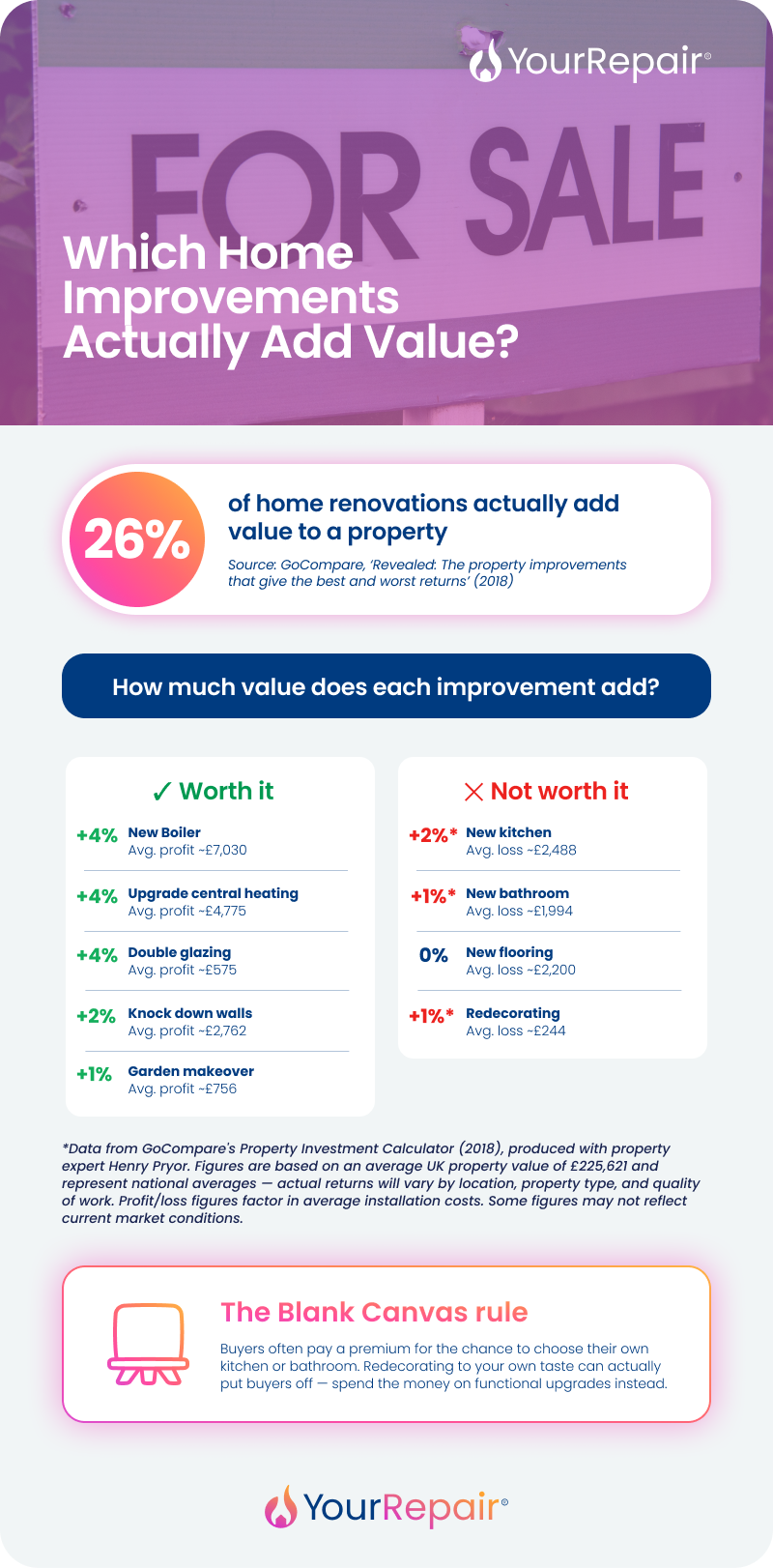
In reality, only around 26% of home renovations actually add value to a property.
According to GoCompare’s research, the most profitable improvements are energy-saving measures.
The following can add up to 4% to the value of your home:
- Upgrading central heating
- Installing double glazing
- Adding a new boiler.
Energy efficiency is also a growing priority
With the upcoming 2030 EPC (Energy Performance Certificate) deadlines, buyers and property investors are actively looking for homes with energy-efficient heating systems.
What kind of boiler adds the most value?
There are a few main different types of boiler in the UK, namely:
- Combi boilers
- Regular boilers
- System boilers.
Each has different strengths and costs.
Modern A-rated condensing combi boiler — the baseline
This is what most buyers expect. And it's what the 4% value-add figure is based on.
Replacing a non-condensing G-rated boiler with a modern A-rated condensing boiler can potentially move a borderline property up an EPC band.
(A C-rated property commands a measurable premium over a D-rated one, especially in the mid-market.)
So a new combi that moves your EPC from D to C is doing double duty:
- It signals a working, modern heating system
- It improves the rating buyers see on Rightmove before they've even walked through the door.
Heat pump — potentially more value, but property-dependent
This is where it gets interesting for a UK homebuyer audience.
The Boiler Upgrade Scheme offers £7,500 off an air-to-water heat pump for eligible homes in England or Wales.
A property with a heat pump already installed is increasingly appealing to many buyers.
This is especially true for those thinking about future energy costs and the potential direction of government policy against gas boilers.
However, in a poorly insulated property, a heat pump might not perform well, which a buyer's surveyor will flag.
So, a heat pump adds more value than a combi only in the right property.
Which boiler is right for your property
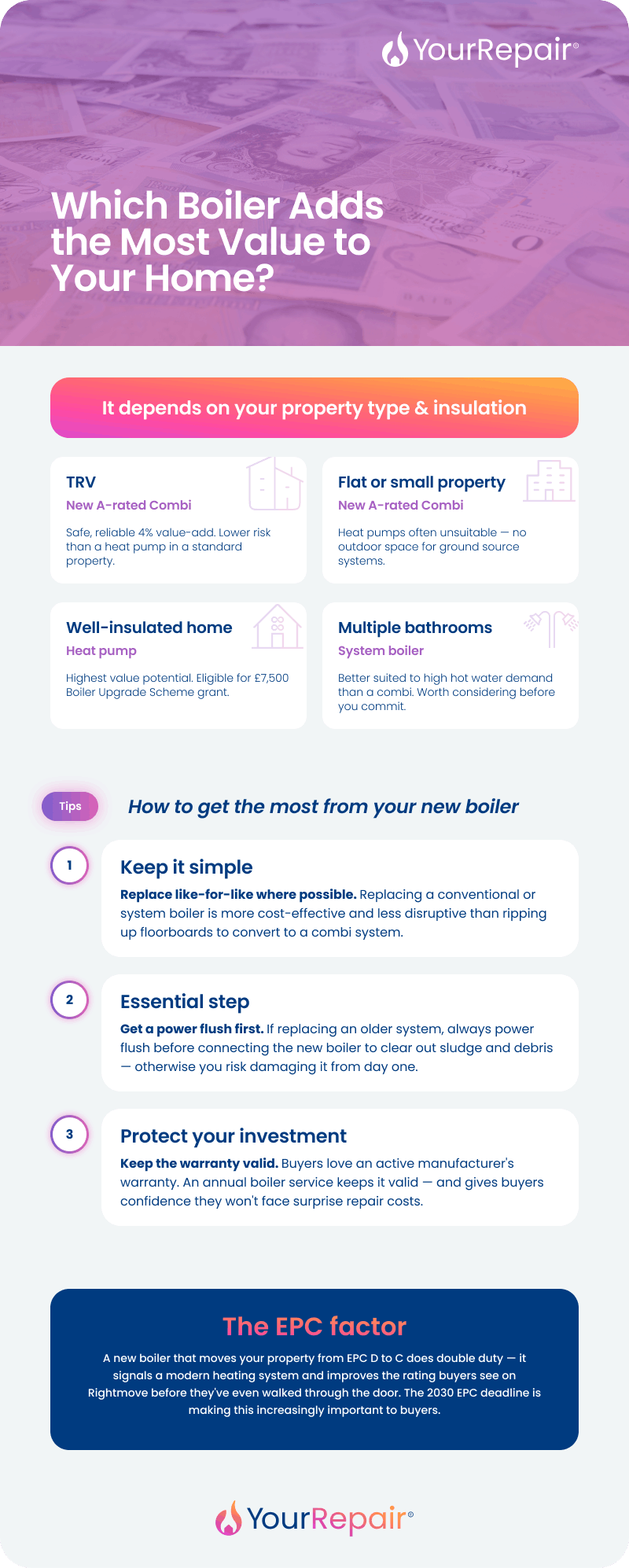
With all things being equal, the best choice (in order) for a well-insulated home, is:
- Heat pump
- New combi
- Old combi.
However, You also need to consider your property type.
For a standard UK semi or terrace: new A-rated combi is the safe bet.
It reliably adds the 4% figure without the risk of a heat pump underperforming and creating a liability rather than an asset.
For a flat or small property: new combi, specifically heat pumps (especially ground source ones) require outdoor space and often aren't suitable.
If you have multiple bathrooms or high hot water demand, a system boiler may add more value than a combi — worth considering before you commit.
What not to spend money on
The most popular home improvement projects are:
- Redecorating (53%)
- Installing a new kitchen (42%)
- Putting down new flooring (38%)
However, GoCompare's data shows these aesthetic changes are incredibly risky investments:
- Kitchens and knocking down walls: Only add around 2% to the value of the property.
- New flooring: Adds absolutely nothing (0%) to your home's value.
- Landscaping: Will generally result in a financial loss.
- Solar panels: Can actually reduce the value of your home by 2%.
The "blank canvas" appeal
Property buyer Henry Pryor advises against redecorating to your own specific taste.
Many buyers prefer a "blank canvas". They will often pay a premium for the chance to install a bathroom or kitchen of their own choosing.
Instead of wasting money redecorating in your personal style, you should spend your money on essential, functional upgrades.
Why a new boiler is a smart investment
With high economic uncertainty and fluctuating mortgage rates, buyers crave financial security.
A brand-new boiler provides significant peace of mind.
Buyers know they will not face emergency replacement costs shortly after moving in.
To get the most value out of your new boiler installation, keep these tips in mind:
Keep replacements simple
Replacing an existing conventional or system boiler is often more cost-effective.
It's also less disruptive than ripping up floorboards to convert to a combi system.
(That said, regular boilers do sometimes leave unsightly pipework on display. But you can take steps to cover this.)
Get a power flush
If you are replacing an older system, you should always get a power flush before connecting a new boiler to clear out sludge and debris.
Protect the warranty
Buyers love the security of an active manufacturer's warranty.
How boiler cover can help
To keep your boiler's warranty valid for the next buyer, you need to ensure it has a proper annual service.
At YourRepair, we offer comprehensive boiler cover plans that include annual boiler checks to protect your warranty and keep you in control.