

How to Turn Off a Radiator: TRV and Manual Valve Steps (Any Type)
There are many reasons you might want to turn off a radiator, from preparing to paint a room to isolating a sudden leak.
Because radiators come in different styles and sizes, the exact steps you take will depend on the type of valves you have.
Quick answer: turn the valve clockwise to close it
This applies whether you have a thermostatic (TRV) or manual valve.
Read on for the full steps for your specific valve type, plus what to do if a knob is missing, broken, or stuck.
Turning off your radiator
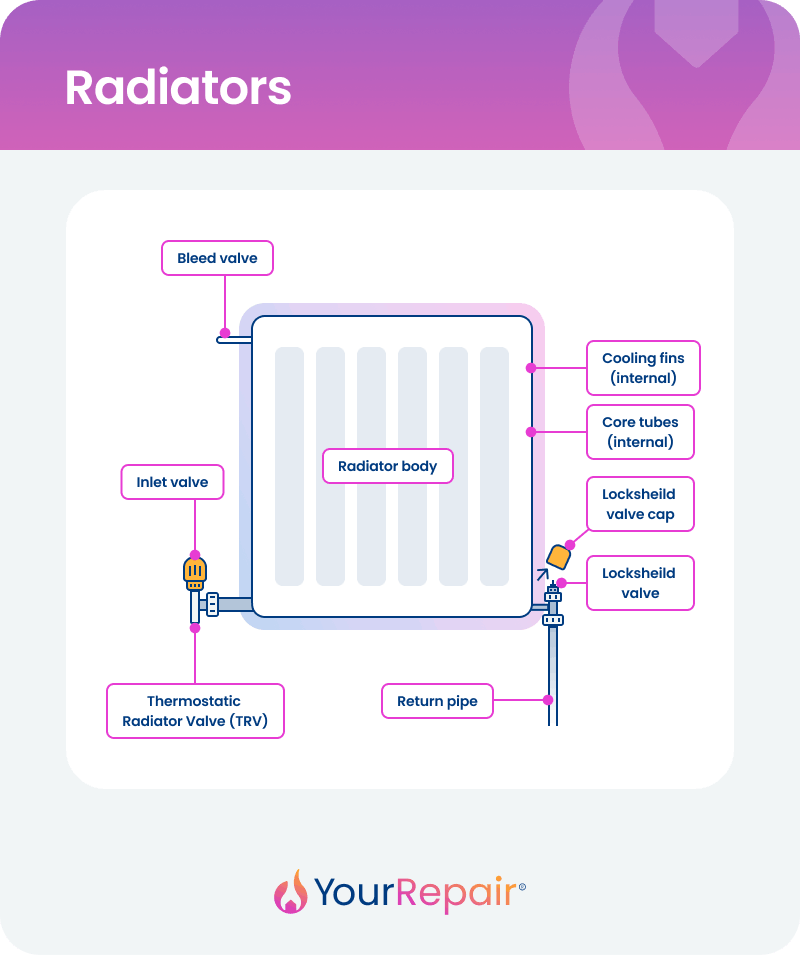
Radiators are turned off and on using the radiator valves located at the bottom of the unit.
To fully isolate a radiator from your central heating system, you must close both valves at both ends of the radiator.
A standard manual valve acts as a simple on/off switch, whereas a thermostatic radiator valve automatically regulates water flow by sensing room temperature.
Closing both of these valves is the only way to fully isolate the radiator's water supply.
Once it's done, you can safely carry out maintenance, paint, or swap the radiator without needing to drain down your entire house's water supply.
Safety warning: Allow the system to cool down first. Before touching radiator valves or carrying out maintenance, you should turn off your central heating so radiators cool down completely. Radiators are filled with highly pressurized hot water and air.Turning valves or working on a hot radiator carries a severe risk of sudden pressure drops and dangerous scalding.
Thermostatic radiator valves (TRV)
Step 1: Finding it
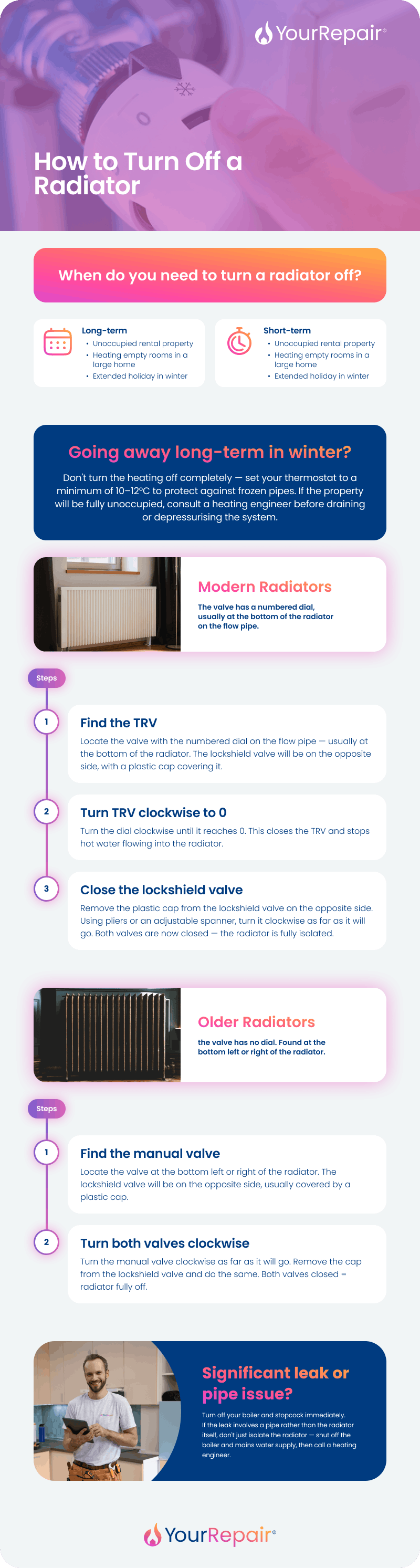
On a modern TRV radiator, the thermostatic control valve is on the flow pipe (the pipe bringing hot water to the unit, usually at the bottom on one side).
It's identifiable by a plastic dial with numbers on it.
On the direct opposite side of the radiator there's a valve called the lockshield valve.
This regulates system balance. It's typically covered by a smooth plastic cap with no numbers.
Step 2: Turn both valves clockwise
To shut off the radiator:
- Turn the numbered TRV dial clockwise until it points to 0 (or the frost/star symbol).
- Move to the opposite side of the radiator and pull off the plastic cap covering the lockshield valve.
- Using pliers or an adjustable spanner, turn the metal spindle clockwise as far as it will go.
Once both valves are fully shut clockwise, the radiator is completely isolated.
Smart controls can make manual valve turn-off redundant.
Troubleshooting stuck or painted valves
On older systems, plastic lockshield caps can be stiff.
If a valve is tough to turn, wrap a cloth around it to get a better grip and protect your hands.
The brass spindles underneath can also seize or get sealed shut under thick layers of paint.
If so, scrape the dry paint away from the spindle before attempting to turn it.
Did you know? A Prussian businessman named Franz San Galli is often credited with inventing the radiator in 1855, when he called his design the "hot box". Its ancestor is in Ancient Rome was called the hypocaust, a furnace that pushed heated air beneath floors to warm the rooms above, most famously in the Roman baths.
What if there's no knob, or the knob is broken?
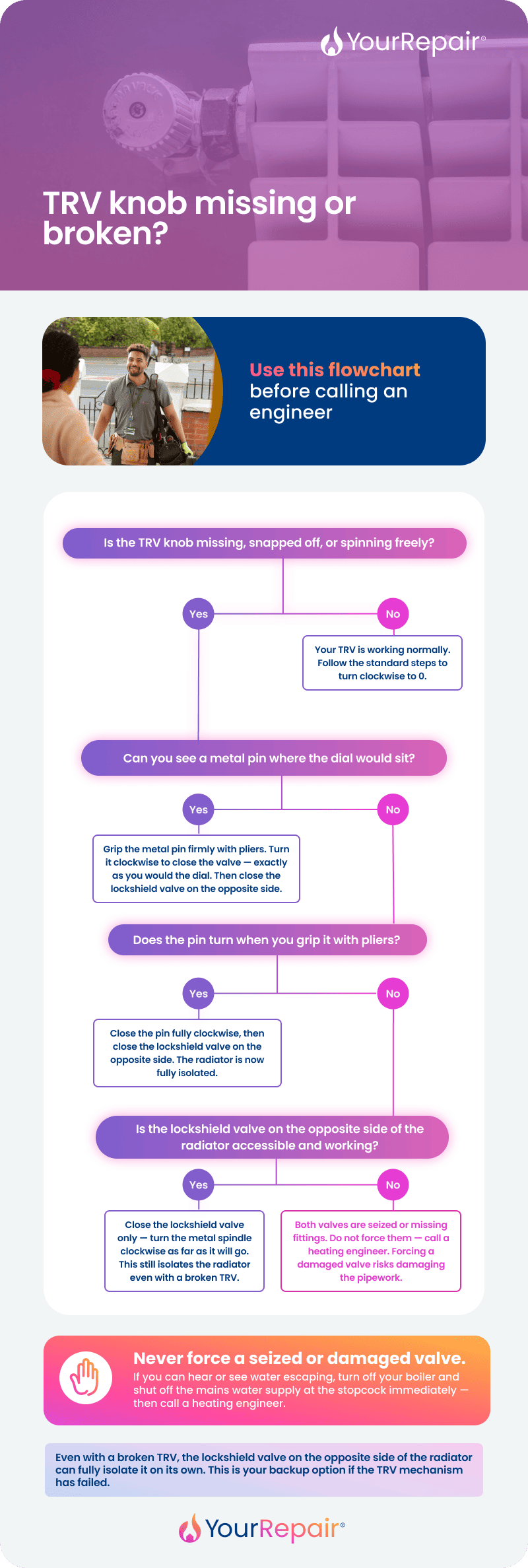
Sometimes the TRV head is missing, snapped off, or spinning freely without engaging the valve underneath. If this happens:
- Look underneath where the dial would sit. There's usually a metal pin. Grip it firmly with pliers and turn it clockwise to close the valve, exactly as you would the dial.
- If the pin won't turn or the whole valve feels loose, the TRV mechanism itself may have failed. In this case, don't force it — turning the lockshield valve on the opposite side will still isolate the radiator, even with a broken TRV.
- If both valves are seized or missing their fittings entirely, it's best to call a heating engineer rather than risk damaging the valve body or the pipework.
Non-thermostatic (manual) valves
Step 1: Find the valves
Identify the manual wheel-head valve on either side at the bottom of your radiator.
The valve on the opposite side is the lockshield valve, which is usually covered by a plain plastic cap.
No thermostat or numbered dial in sight? That's your sign you have a manual valve - the steps below apply to you.
Step 2: Turn both valves clockwise
- Turn the manual wheel-head valve clockwise as far as it will go
- Remove the plastic cap from the lockshield valve on the opposite side
- Use pliers or an adjustable spanner to turn the metal spindle clockwise until it's closed
Just like with thermostatic systems, use a cloth for leverage or scrape away paint if needed.
Considerations before switching off your radiator
Long-term switch off
There are several scenarios for turning radiators off for a long period:
- An unoccupied rental property
- Unused rooms in a large property
- Empty properties (owners are on an extended holiday)
In each case, an alternative is to turn the thermostat down to a minimum frost-protection temperature (typically around 10–12°C).
This keeps some warmth in the pipes, which protects them from freezing or bursting.
Short-term switch off
You might need to isolate your radiator quickly in several situations, such as:
- Your radiator has a leak
- It's not heating up properly
- You suspect another issue
Here, you should isolate it quickly by closing both of its valves.
If the leak is significant, or water is spraying from a pipe, turn off your boiler and shut off the mains water supply at your stopcock immediately.
After this, contact a heating engineer.
Decorating pro-tip
If you are removing a radiator to paint behind it, note the number of turns it takes to close the lockshield valve. You can then write it in pencil on the back of the radiator panel.
When you hang it back up, open the lockshield by the same number of turns. This avoids a manual re-balancing process.
Bleeding vs. switching off
Bleeding a radiator is different from switching it off.
Bleeding involves releasing trapped airlocks to help the radiator perform better and distribute heat evenly.
The most common sign that you need to bleed a radiator (rather than turn it off) is if the radiator is hot at the bottom but cold at the top.
Regular bleeding keeps your central heating system running efficiently and your energy bills low.
How to turn off a radiator without a knob
First, pull the plastic cap off the valve body to expose the small metal spindle underneath.
Next, use pliers to grip the flat sides of the brass spindle. Turn it clockwise as far as it will go.
Read: Power Flush for Central Heating: How It Works & How Long It Takes
How to turn a radiator back on
A typical UK home radiator runs at around 70-75°C at its top section. Cast iron radiators run even warmer, sometimes up to 88°C. Government body the Health and Safety Executive (HSE) considers a radiator surface of 43°C or above a scalding risk, especially for children and the elderly.
To turn your radiator back on, simply reverse the steps you took to close it.
For a thermostatic valve radiator, turn the dial anti-clockwise back to your preferred number setting. For a manual valve, turn the wheel-head anti-clockwise as far as it will go.
Finally, use your spanner to open the lockshield valve on the opposite side.
Turn the spindle anti-clockwise by the exact number of turns you wrote down when closing it. This restores water supply whilst keeping your central heating system balanced.
Central heating cover from YourRepair
Unexpected heating breakdowns can happen. Get protected today with central heating cover from YourRepair. T&Cs apply.